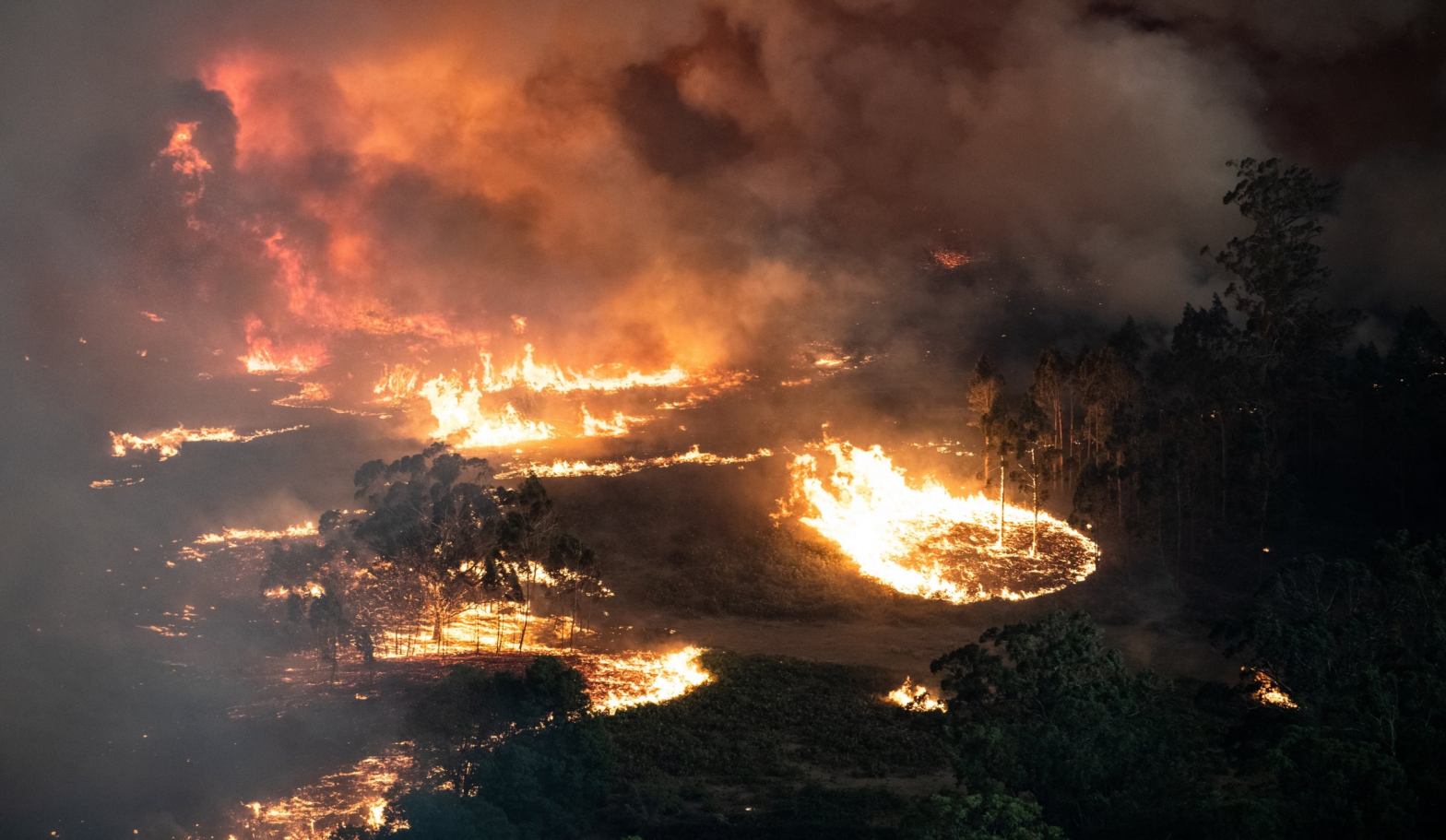
The thoughts and prayers of the world fell upon Australia in the fall of 2019, as bushfires raged throughout the oceanic country. Photos and videos of wildlife and people fleeing the rapidly spreading flames drew global attention and heartbreak. But sadly, the enormity of this tragedy is still unfolding in 2020 and the devastation grows daily. With more fire comes new concerns, including extreme weather changes that may inadvertently feedback into the wildfire issue.
Scientists Share Unsettling Weather Forecast
As per scientists, the near-future for the country of Australia could involve some strange weather and more fire – stemming directly from the fires already burning nationwide. Specifically, according to the Bureau of Meteorology in Victoria, the ongoing blazes across Australia are predicted to create several giant thunderstorms, which could spark more fires in the drought-ridden country. This phenomenon, which often entails severe thunderstorms and sometimes fire tornados, is precipitated by pyro-cumulonimbus clouds (clouds born of flames, sometimes referred to as pyroCbs). (1)
Pyro-Cumulonimbus Clouds
In a pyro-cumulonimbus cloud, heat, ash, smoke, and moisture from a bushfire condense into dangerous storm clouds. The higher these clouds climb in the sky, often pushed by a fire’s updraft, the more they begin to act like regular weather clouds. But instead of precipitation like rain or snow, the fire-fuelled clouds produce sweeping lightening, warm winds, and ember rainfall. Researchers have found pyro-cumulonimbus clouds can impact areas as far as twenty-two miles away from the original fire.
In the past, pyro-cumulonimbus clouds have been largely studied in Canada and the United States during west coast fire seasons. (2) However, pyro-cumulonimbus clouds have already been spotted by meteorologists off the coast of the Australian state of Victoria, and are suspected by fire officials to be the cause of two new fires in another Australia state, New South Wales. As heat levels rise and fires continue to burn, more pyro-cumulonimbus clouds are likely to be generated. (1)
On The Ground Safety
For Australians, issues of air quality during these adverse weather and fire events reign supreme. Certainly with the bushfires reaching “catastrophic” levels and twenty-five people already dying in the flames, there is an immediate risk of harm in some regions. (3) But day to day, Aussies should be mindful of the reduced air quality, which has reached unsafe levels throughout the country. Anyone spending prolonged periods of time outside should wear a face mask, preferably one with a built-in respirator that traps dangerous particles. Wildfires, in particular, can release hazardous fine particles, which if breathed in can cause lung inflammation, respiratory distress, and exacerbate respiratory conditions like asthma and bronchitis. In some Australian states, children are being kept indoors for lunch, ferries have been canceled, and workers have been asked to stay at home to avoid unnecessary exposure to the air. Australians are asked to reach out to their local health authorities with additional questions or concerns about air quality. (4)
Though the hope is that normalcy can soon be restored to all Australians, issues in the air may be ongoing. Smoke and aerosols from wildfires can linger in the atmosphere for months. Additional fires, such as those anticipated from pyro-cumulonimbus clouds will unfortunately only prolong this process. Further research will definitely be needed to fully understand the environmental and health issues gripping this country in chaos.Sources
 Health,Peace,Positive HPP